Chhath Puja 2026: Dates, the Four Days, Rituals, Prasad and How to Photograph It Respectfully
By the Share2Earn team · · 8 min read
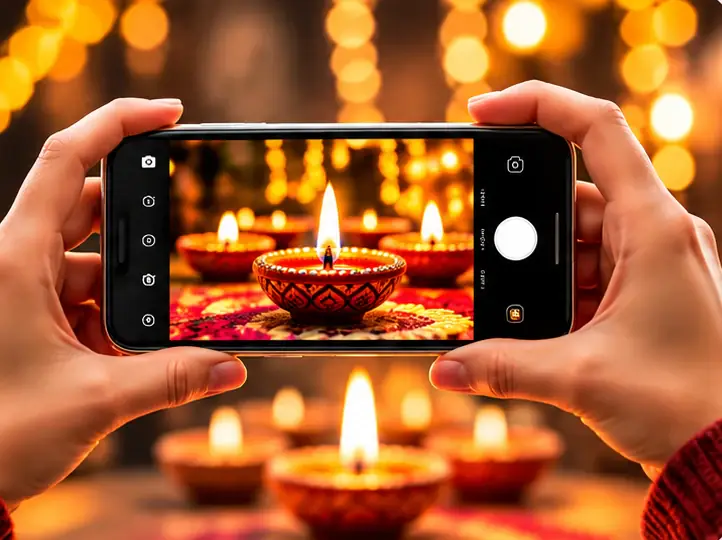
A few days after Diwali, river banks and ponds across Bihar, Jharkhand and eastern Uttar Pradesh fill with families standing in the water as the sun goes down. This is Chhath Puja, a four-day festival of thanks to the Sun. In 2026, Chhath runs from Friday 13 November to Monday 16 November, with the main evening offering on Sunday 15 November. Here is what happens on each day, what the prasad means, and how to take good photos without getting in anyone's way.
In this article
What is Chhath Puja?
Chhath Puja is dedicated to Surya, the Sun god, and to Chhathi Maiya, a mother goddess traditionally worshipped for the health, long life and wellbeing of children and family. In popular tradition, Chhathi Maiya is often described as the sister of Surya.
The name comes from the word for six: the main day falls on Shashthi, the sixth day of the bright half of the month of Kartik, six days after Diwali. Devotees thank the Sun for life and energy, and offer arghya, an offering of water and prasad, to both the setting and the rising sun.
Chhath is known for its simplicity and discipline. There is no idol in most homes and no priest is needed at the ghat. Instead there is fasting, cleanliness, home-made prasad, folk songs and a whole community gathering at the water's edge. A smaller spring version, Chaiti Chhath, is observed in Chaitra.
The person who keeps the fast is called a vrati (or parvaitin). Many vratis are women, but men keep the vrat too, and the whole family helps.
Chhath Puja 2026 dates: the four days
These are the commonly listed dates for India. Sunset and sunrise times vary by city, so check a local panchang for exact arghya times.
Day 1: Nahay Khay — Friday 13 November 2026
Nahay Khay means "bathe and eat". Vratis take a holy dip, traditionally in a river or pond, and the house is cleaned thoroughly. They eat one simple, sattvic meal, often rice, chana dal and lauki (bottle gourd), cooked without onion or garlic.
Day 2: Kharna (Lohanda) — Saturday 14 November 2026
On Kharna, vratis fast through the day without water. In the evening, after a puja, they break the fast with prasad of rasiao kheer (rice cooked with jaggery), roti and fruit. This prasad is shared with family and neighbours. After Kharna begins the main fast, which is traditionally nirjala, without food or water, for around 36 hours.
Day 3: Sandhya Arghya — Sunday 15 November 2026
This is the main day. In the afternoon, families carry offerings to the ghat in bamboo baskets. Vratis stand in the water and, as the sun sets, offer arghya to the setting sun. The ghats are lit with diyas and filled with songs. In Patna, sunset on this day is listed at around 5 pm; other cities differ.
Day 4: Usha Arghya — Monday 16 November 2026
Before dawn, families return to the ghat. Vratis stand in the water again and offer arghya to the rising sun. After the offering, they break the long fast, usually with a little prasad and water or ginger, and the prasad is shared with everyone. This is called parana.
Tip: If you plan to visit a ghat, arrive early. Popular ghats fill up hours before sunset on Sandhya Arghya, and many families reach before dawn for Usha Arghya.
Where is Chhath celebrated?
Chhath is most closely linked with Bihar, Jharkhand and eastern Uttar Pradesh, and with the Bhojpuri, Maithili and Magahi-speaking communities of the region. It is also widely observed in the Terai region of Nepal, including around Janakpur.
Wherever families from these regions have moved, Chhath has followed. In Delhi, ghats along the Yamuna and many local ponds and artificial ghats fill up on Sandhya Arghya. In Mumbai, families gather at Juhu beach and lakes across the city. Many other cities have their own Chhath ghats, and the diaspora observes Chhath abroad too, from Mauritius to the UK and the USA.
Chhath prasad: thekua and the bamboo soop
Prasad for Chhath is made at home with great care. Traditionally it is cooked in a freshly cleaned kitchen, often on a mud stove using mango wood, and nobody tastes it before it is offered. Common items include:
- Thekua: the signature Chhath prasad, a crisp, sweet biscuit of wheat flour, jaggery and ghee, pressed with a wooden mould for its pattern.
- Kasar or rice laddoo: sweet balls made with rice flour and jaggery.
- Seasonal fruit and produce: sugarcane, bananas, coconut, sweet lime, water chestnut (singhara), radish, ginger and turmeric plants.
- Rasiao kheer: rice cooked with jaggery, made on Kharna evening.
The offerings are arranged in a soop, a flat bamboo winnowing tray, and carried to the ghat in a large bamboo basket called a daura or daliya, often on the head of a family member. Sugarcane stalks are sometimes tied together to make a small canopy at the ghat or at home.
Chhath songs
Chhath is a festival you hear before you see. Women sing traditional folk songs in Bhojpuri, Maithili and Magahi while preparing the prasad, walking to the ghat and waiting for the sun.
Songs such as "Kaanch hi baans ke bahangiya" and "Uga ho suraj dev" are heard at ghats every year. Recordings by the folk singer Sharda Sinha are especially loved and are closely associated with the festival for many families.
Celebrating with care for the river
Chhath is a festival of water and sun, so it makes sense to keep rivers and ponds clean:
- Use bamboo, clay, leaves and natural materials, as tradition does, rather than plastic bags and thermocol plates.
- Take back what you bring. Leave flowers, wrappers and packaging in the bins provided, not in the water.
- If your local river is polluted or crowded, a community pond, a clean artificial ghat or a tub on the terrace is a respected alternative used by many families.
- Follow the instructions of local police, volunteers and ghat committees, especially near deep water.
Photographing Chhath respectfully
Sunset skies, reflections and bright saris make Chhath beautiful to photograph. But it is a deeply personal prayer by people who have not eaten or drunk for many hours, so put their comfort first.
Respect first
- Ask before photographing a vrati, especially close up. A smile and a gesture towards your phone is enough. If someone says no or looks away, move on.
- Never block the view of the sun. Do not stand in front of devotees or between them and the water while they offer arghya. Shoot from the side or from behind the crowd.
- Do not step on offerings or put your bag near the soop and daura.
- Avoid the flash completely. It disturbs prayer and spoils the natural light anyway.
- Do not photograph children's faces closely without their parents' clear agreement.
Phone tips for sunset and sunrise
- Arrive early and pick a spot. A raised step at the back of the ghat or a bridge gives you a wide view without getting in anyone's way.
- Shoot silhouettes against the sun. Tap on the bright sky to set exposure, then slide brightness down a little. Devotees holding up their soop become dark shapes against an orange sky.
- Use the reflections. Get low, near the edge of the water (on safe ground), so the sky and the lamps are mirrored in the river.
- Keep shooting after sunset. In the blue hour, the diyas, lights and the last colour in the sky balance beautifully. Hold the phone steady against a railing or use night mode. Our night photography guide explains how.
- Look for details. Thekua in a soop, a sugarcane canopy, wet hands holding a diya: close-ups tell the story without showing faces.
- For Usha Arghya, be ready before dawn. The sky changes fast. Start shooting in the dark blue light, before the sun appears, and keep going as it rises through the mist.
Stay safe near the water
- Do not enter the water for a photo, and keep away from the edges of steep or slippery ghats.
- Stay inside barricaded areas and listen to volunteers and police.
- Agree on a meeting point with your family in case you get separated.
Questions
When is Chhath Puja in 2026?
Chhath Puja 2026 is commonly listed from Friday 13 November (Nahay Khay) to Monday 16 November (Usha Arghya). The main evening offering, Sandhya Arghya, is on Sunday 15 November. Check a local panchang for exact sunset and sunrise times in your city.
What are the four days of Chhath Puja?
Nahay Khay (holy bath and one sattvic meal), Kharna (a day-long fast ending with kheer and roti prasad), Sandhya Arghya (offering to the setting sun) and Usha Arghya (offering to the rising sun, after which the fast is broken).
Which god is worshipped in Chhath Puja?
Chhath is dedicated to Surya, the Sun god, and Chhathi Maiya, a mother goddess traditionally worshipped for the wellbeing of children and family.
What is thekua?
Thekua is the best-known Chhath prasad: a crisp, sweet biscuit made from wheat flour, jaggery and ghee, usually pressed with a patterned wooden mould and offered to the sun before being shared.
Is it okay to take photos at a Chhath ghat?
Generally yes, from a respectful distance. Ask before photographing vratis up close, never stand between devotees and the sun, avoid flash and do not step on offerings. Stay out of the water and follow volunteers' instructions.
Play the Festival Quiz Month
A free daily quiz on Diwali, Chhath and Guru Nanak Jayanti until 30 November, plus the 1-minute Daily World Quiz in 10 categories. Every quiz earns points for your account.
Play the quiz →